

Lot #1
Modern day takeaways from a 130 year old travelogue.

Welcome to the first installment of my new series, “Lot #.”
Surrounded by centuries of physical media in the wunderkammer I spend my time in, I thought we might travel back to the gardens, gatekeepers and throne pretenders of the past, thread them through the cultural quirks of today, and top them off with the perfect measurements of saudade, serendipity and sprezzatura.
Because aren’t we all on this holy grail quest to quench longing, lock lips with luck, and melt into an effortless existence.
I have found that by going back in time, you can tap into a little bit of all three.
So without further ado, Lot #1 Paris, 1895
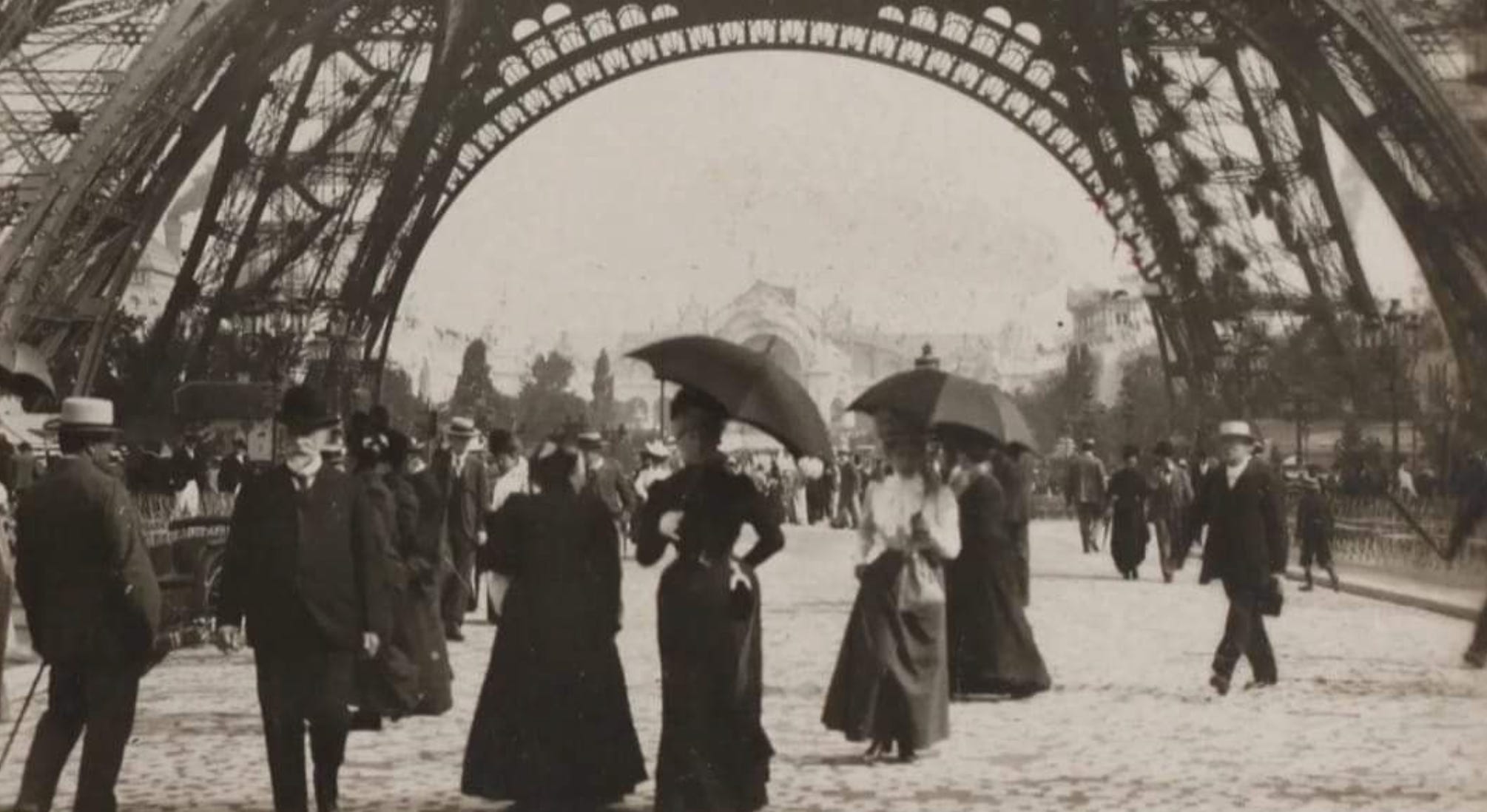
For all intents and purposes, Paris is HER. Richard Harding Davis, a wartime correspondent, has just penned About Paris, a travelogue determined to capture the essence of the city of lights found in the fashions, politics, entertainment, restaurants and streets. Through four main sections—the Streets of Paris, the Showplaces of Paris, Paris in Mourning, The Grand Prix + Other Prizes, and Americans in Paris—the takeaways read strikingly relevant today.
Living in the Present
Davis’ record starts where so many travel accounts often do, on the “unimportant” streets which only its residents hold in high regard. The street as the anchor of action levels the playing field for those across oceans. We all know that street. The balcony dripping in vines, the eccentrics on corners, curmudgeonly shopkeepers, the concierge stationed at the door.
We also all know busy bodies, scheduled spectacles, and names shrouded in short-lived celebrity that take residence either two doors or two blocks over. In the instance of Davis’ street, it was a poet.
Those in 1895 taking this quiet thoroughfare to access the Rue de Rivoli, which ran parallel, or the Rue Castiglione, which ran perpendicular, to the author’s street sometimes stopped at a plaque to honor the poet’s life, but the real attraction was the men and women leaning over the balconies for the view of a red setting sun and the starting pistol which commenced the overture wafting from the Boulevards.
In this chapter, Davis lays the groundwork for his prevailing message:
“Those that have enjoyed life fully, had gotten out of the present all that the present had to give.”
And without living in the present, our correspondent would not have been able to capture the rhythms of the cobbled street in such high resolution.
The Highlight Reel
Known for its luminosity, men and women ignite Paris’ gas lamps each night, throwing ubiquitous spotlights on the social dances of the night. Davis sits at Café de la Paix, our vantage point for observing the city’s underbelly, witticisms and café politics, showtime spots where women high kick into the wee hours and opera houses fill with critics and dreamers.
We round the corner and happen upon the frenzy to see and be seen on the Champs des Élysées, or in our case, insert instagrammable destination.
Yet Davis doesn’t just offer the highlight reel. He illustrates morbid murals detailing crimes of those with regular seats in salons. The many ways in which a visitor can travers Paris starting the sewers to streets to the top of the Eiffel Tower in half a day. Logistics mind the clock, but in 1895, he recognizes a population that still longs for the Paris “before”—harkening to provincial windmills as the Moulin Rouge blazes red, overshadowing bucolic reprieves from the Second Empire.
“We are always ready to doubt whether that which has passed away, and which in consequence we cannot see, was as remarkable as it is made to appear. We depreciate it to console ourselves… perhaps it is true that Paris was more careless and happy then.”
In this age, we are beyond consolation. Our souls long to wind back the clock, forget the digital age, links and all.
Image Is Everything
When the president of Paris is assassinated, we observe a cultural comparison. In America or England, the public reacts to the vacant position. Yet the Parisians carry on, shock rendered them numb, or rather, apathetic.
Still, the global pendulum swings, and the citizens must perform grief for cameras they can’t see. Papers post telegraphs from emperors and tsars. Parisians barter for balcony views of the funerary parade. Whispers spread that the country might return to fashionable splendor and unused ballrooms might once again fill with the drunk and merry.
When it came to reelection, the chamber at Versailles garnered lackluster interest, settling on a single ballot hinging on this: the President of France needed to look good on horseback.
Elections have been won over less.
Gatekeeping
Davis establishes himself as an expert turn-of-the-century travel blogger. He recommends avoiding the futile search for a fiacre after the Grand Prix by stopping within sound of a particular waterfall, or coordinate a carriage exchange at the restaurant among the trees. The only difference being that one route helps you avoid scuffs on freshly shined shoes.
Then he sets chic straight.
Once home from the races, the night evolves into one big party to end all parties. Social classes are left behind. Ladies get their one night out in public, opera coats falling halfway down their shoulders. Companions of princes and hired dancers float on the same stage, smiling at one another, famous in their respective worlds.
This is chic. No rules. Organic juxtaposition. A serendipitous snapshot of life. A glimpse into the divine.
Say less.
Davis also encounters the Forty Immortals of the Institute of France, a group 40 elected intellectuals from all disciplines. The gen pop’s opinion splits: reverence or revulsion. Scholars who walk through the Academy doors “lose all sense of originality,” yet the executive power beheld by the amorphous institution establishes the chosen as gatekeepers of taste. One such example is the Fête de Flowers in the Bois de Boulogne. For a couple of francs, city-goers are allowed to claim their spot for the ceremonial festoon of florals, yet the same sponsor literally closes the gates on the world’s most erudite.
Does this sound like anyone, or any entity, you know?
Instagram vs. Reality
Davis’ final chapter hinges on anthropomorphizing Paris and the preconceived notions Americans have before they have spent any time in Her embrace. For centuries, humans have taken a spot on a bench by the Seine, hoping to win Her heart, yet the city of love often spits the underprepared back out. Back across the sea, to the provinces, the rivieras. The “Dreamer” trope persists, but just like our society today, Paris moves on to better things. Someone will always be prettier than you, more artistic than you, richer still but like addicts, American’s and more chase Her approval, self-medicate against the existential weight of it all.
Our travel expert’s biographical conclusions on the different classes of visitors that enter the city, are almost like a quiz you might find online. Which type of American in Paris are you.
Hopeless, humbled, hedonistic, hypocritical or heartbroken.
The man or woman that surfaces unscathed from the labyrinthine Lútece, Paris’ ancient moniker, turns their time abroad into something impactful, instead of leaving pieces of their soul on the boulevards.
It’s all a matter of perspective.
The emotions of those Americans in Paris in 1895 are no far cry from our desire today. Still performing for cameras we can and can't see as we long for a version of the city, a golden age, always another advantageous time for living more beautifully. But maybe that's not the tragedy, perhaps that's the point.
If we keep digging, we can bring that beauty into our own timeline.
I adore this. Sprezzatura splendor indeed
Love it! What a creative series. This line really hit me: "Those that have enjoyed life fully, had gotten out of the present all that the present had to give." We need to do that more as a society!